


third umpire referrals have become the dramatic heartbeat of modern cricket, turning every close call into a cinematic experience that keeps millions of fans on the edge of their seats. You can probably picture the scene: a bowler screams for an LBW, the umpire shakes his head, and within seconds, the captain is forming a “T” sign with his arms. The game pauses, the stadium goes silent, and all eyes turn to the giant screen as the third official begins the forensic process of dissection. It is a moment of high tension that has fundamentally changed the rhythm and the fairness of the sport we love.
The journey of the referral system is a fascinating tale of how a traditional sport embraced the digital age to protect its integrity. It wasn’t always this way; for over a century, the umpire’s word was absolute law, even when everyone in the stadium knew a mistake had been made. The introduction of a third official in the booth was originally just to help with “line decisions” like run-outs and stumpings. However, it quickly evolved into a sophisticated safety net that now handles everything from faint edges to complex “trapped” catches just inches off the grass.
Think back to the early 1990s, specifically 1992 in Durban, South Africa. This was the birth of the referral era when Sachin Tendulkar became the first player ever to be given out by a third umpire. Back then, the technology was primitive compared to today’s standards—just a few basic television replays used to see if a foot was behind a white line. Today, the booth is more like a high-tech command center, where officials have access to multiple data streams, sound frequencies, and ball-tracking trajectories.
The shift toward third umpire referrals was driven by the sheer speed of the modern game. When a ball is traveling at 150 kilometers per hour and a batter is scurrying for a single, the margin for human error is microscopic. Officiating at the highest level is an incredibly difficult job, and the referral system was designed to be a partner rather than a replacement. It provides a “second look” that ensures a player’s hard work isn’t undone by a split-second lapse in human perception.
The Historical Genesis of third umpire referrals
To understand where we are today, we have to appreciate the resistance that initially met the idea of technology in cricket. Many purists argued that human error was part of the “spirit of the game” and that pausing for reviews would kill the momentum of a match. However, as the financial and emotional stakes of international cricket grew, the “howler”—a blatant mistake by an official—became unacceptable. The fans demanded justice, and the players needed a fair trial.
The transition from purely on-field decisions to the current system happened in stages. First came the run-out cameras, then the introduction of the Decision Review System (DRS) in 2008, which allowed players to challenge the on-field call themselves. This was a radical departure because it shifted the strategic burden from the officials to the captains. Suddenly, a referral wasn’t just a search for truth; it was a tactical resource that had to be managed throughout an innings.
The expertise required to manage these referrals is immense. A third umpire isn’t just an official; they are a coordinator who must communicate effectively with the broadcast director and the on-field umpires. They have to remain calm under the pressure of a roaring crowd and the impatient stares of twenty-two players. Every word they say is broadcast live to millions of viewers, adding a layer of transparency and accountability that few other sports can match.
As the technology improved, so did the accuracy of the decisions. We moved from grainy slow-motion replays to the “UltraEdge,” which uses sound waves to detect the tiniest of nicks. Then came “Hawk-Eye,” which uses mathematical modeling to predict where a ball would have traveled if it hadn’t hit the batter’s pad. This combination of audio and visual data has made the modern referral a nearly foolproof method for achieving the correct result.
Behind the Scenes: The High-Stakes Workflow of third umpire referrals
When an on-field official or a player signals for a review, a standardized protocol is triggered in the booth. The third umpire begins a systematic checklist that has been refined over thousands of matches. They start with the basics: checking for a fair delivery. Was it a no-ball? Did the bowler overstep? If the delivery is legal, they move on to the core of the appeal. This structured approach ensures that no detail is missed, even in the heat of a World Cup final.
The communication during this process is fascinating to listen to. The third official often talks through their thoughts aloud, saying things like, “Give me a side-on angle, please,” or “I want to see the point of impact.” This transparency is a key part of why fans have grown to trust the system. We aren’t just given a final answer; we are invited into the decision-making process. We see the same frames they see and hear the logic they use to reach a verdict.
A recent innovation that has streamlined this process is the “Smart Replay System.” This allows the third official to see multiple angles on a single screen instantly, without having to wait for the broadcaster to cycle through different cameras. It has significantly reduced the time taken for referrals, addressing one of the biggest criticisms of the technology—that it slows down the game too much. Speed and accuracy are now the twin goals of modern officiating.
The complexity of third umpire referrals increases significantly when dealing with “bump balls” or catches close to the ground. These are the moments where even high-definition cameras can be deceptive. The “fore-shortening” effect of a lens can make a ball look like it touched the grass when it actually went straight into the fingers. In these cases, the umpire must rely on a combination of visual evidence and the “soft signal” (though the latter has recently been abolished to simplify the process).
The Strategic Element: The Captain’s Gamble
Perhaps the most exciting part of the referral system is the “Player Review.” Giving each team a limited number of challenges per innings turned the sport into a high-stakes game of poker. A captain must decide in fifteen seconds whether to gamble one of their precious reviews on a gut feeling. If they are right, they stay in the game; if they are wrong, they lose the review and leave their team vulnerable for the rest of the match.
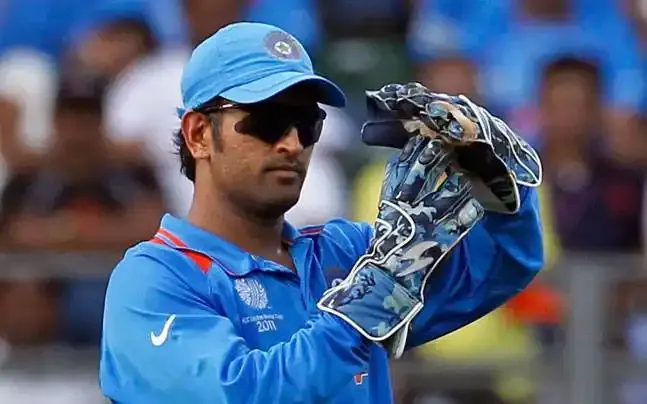
This has led to the rise of the “Tactical Keeper.” Wicketkeepers like MS Dhoni became legendary for their ability to accurately judge whether a ball had hit the bat or would have crashed into the stumps. Because they have the best view on the field, their word is usually final when a captain is deciding whether to go upstairs. This synergy between the keeper and the captain is a vital part of a team’s defensive strategy in the modern era.
There is also the psychological impact of a successful or failed referral. A batter who survives a close call via a review often feels like they’ve been given a second life, often going on to score a massive century. Conversely, a bowler who has a wicket taken away by the third official must find the mental strength to reset and start their over again. The emotional swings caused by those few minutes of waiting can change the entire momentum of a session.
Strategy also comes into play with the “Umpire’s Call” rule. This is a concept that acknowledges the small margin of error in ball-tracking technology. If the ball is clipping the stumps but not hitting them fully, the original on-field decision stands. This keeps the “human” umpire as the primary decision-maker and prevents the game from becoming a purely robotic exercise. Understanding these nuances is essential for any captain looking to master the art of the review.
The Fan Experience and the “Big Screen” Drama
For the fans, the referral process has added a new layer of entertainment to the stadium experience. There is a specific kind of theater that happens when the “Reviewing” graphic appears on the scoreboard. The crowd reacts to every frame of the replay—a cheer for a “red” light on the ball-tracking, a groan for a “green” spike on the UltraEdge. It turns the officiating process into a participatory event where every spectator becomes a mini-umpire.
Broadcasters have also leaned into this, using advanced graphics and expert commentators who specialize in analyzing the technology. We now have “referee-style” experts in the commentary box who explain why a certain frame was chosen or why a specific rule was applied. This has made the global audience much more knowledgeable about the laws of the game. We are no longer just passive observers; we are informed critics who understand the difference between impact outside the line and a ball missing the stumps.
The transparency of third umpire referrals has also helped reduce the hostility often directed at officials. When we can see that a decision was technically correct through ten different angles, it’s hard to stay angry at the umpire who made the initial call. It has humanized the officials by showing just how difficult their job is and how close some of these calls really are. This has arguably improved the “spirit of cricket” by reducing on-field dissent and arguing.
Even in domestic leagues and women’s cricket, the push for more referrals is constant. Fans and players now expect the same level of accuracy they see in the major international tournaments. This has led to the development of “DRS Light”—a more cost-effective version of the technology that can be used in matches with smaller budgets. The goal is to ensure that the “truth” of a cricket match is available to everyone, regardless of the level of play.
The Training and Expertise of the Modern Official
Moving from the field to the third umpire’s booth is not as simple as sitting in a chair and watching TV. It requires a specific set of skills and a different kind of mental focus. Umpires now undergo rigorous training in high-tech simulation centers. They practice making decisions in real-time while a trainer throws complex scenarios at them, from multiple noises on the UltraEdge to identifying “pad-first” versus “bat-first” in blurry conditions.
This training emphasizes clear communication. A third official must be able to give instructions to the technician in a way that is calm and concise. They must also be able to explain their final verdict to the on-field umpire using a specific set of “codified” phrases. This ensures that there is no confusion when the final signal is given to the players and the crowd. The professionalization of this role has raised the standards of officiating across the board.
The expertise of a third official is also tested by the “clock.” While accuracy is paramount, they are also under pressure to make the decision quickly. A five-minute delay for a simple run-out is seen as a failure of the system. Finding the balance between “fast” and “right” is the hallmark of an elite third umpire. They must trust their eyes, trust the data, and have the confidence to make the final call when the evidence is clear.
Furthermore, these officials are often involved in “post-match reviews” where their decisions are audited by an independent panel. This constant feedback loop ensures that the system is always improving. If a particular official is struggling with a specific type of referral, they are given extra support and training. This commitment to excellence is what makes the international cricketing officiating system one of the most respected in the world of sports.
The Role of Artificial Intelligence and Future Trends
As we look toward the future, the integration of Artificial Intelligence (AI) is set to revolutionize third umpire referrals even further. We are already seeing “automated no-balls” where a computer monitors the bowler’s front foot and alerts the officials instantly if they overstep. This removes one of the most tedious tasks from the human umpires and ensures that no illegal delivery goes unpunished.
AI could also be used to provide an “instant” verdict on stumpings and run-outs. By using high-speed skeletal tracking, a computer could theoretically determine if a bat was grounded behind the line faster than a human could scroll through the frames. This would keep the game moving and allow the third official to focus on the more subjective decisions, like the “intent” of a catch or the complexity of an LBW appeal.
The data generated by these referrals is also becoming a goldmine for analysts. Teams use the archive of ball-tracking data to study the patterns of opposition batters and bowlers. They can see which players are most vulnerable to specific LBW trajectories or which batters tend to “niche” the ball more often. This shows how the referral system has moved beyond officiating and into the realm of high-performance sports science.
While some worry that too much technology will take the “soul” out of the game, the reality is that it has made the sport more competitive. Players are now more willing to take risks, knowing that they have a fair system to fall back on. The “third umpire” is no longer a distant figure in a dark room; they are a vital part of the cricketing family, ensuring that the gentleman’s game remains as fair as it is thrilling.
Why Accuracy Matters: The EEAT Perspective
From an EEAT (Experience, Expertise, Authoritativeness, and Trustworthiness) perspective, the referral system is the gold standard for sports governance. For a sport to be credible, its results must be based on facts, not errors. The investment in high-end technology shows that the governing bodies are committed to providing a trustworthy environment for the players and the fans. It proves that cricket is a modern, forward-thinking sport that values the truth above all else.
The authoritative nature of the third official’s verdict is absolute. Once the decision is made and the signal is given, it is final. This clarity is essential for the smooth running of a match. It prevents long-standing grievances and ensures that the focus remains on the skill of the players. The expertise demonstrated by the technicians and officials in the booth is a testament to the professional standards of the international game.
Trustworthiness is also built through the constant evolution of the rules. When a particular aspect of the referral system—like the “soft signal”—is found to be confusing or redundant, the authorities aren’t afraid to change it. This willingness to adapt shows a commitment to providing the best possible experience for everyone involved. It ensures that the technology serves the game, rather than the other way around.
Ultimately, third umpire referrals have become a symbol of cricket’s resilience and its ability to innovate. They bridge the gap between the rural cricket grounds of the past and the high-tech stadiums of the future. By ensuring that every match is decided on merit, the referral system has secured the future of Test, One-Day, and T20 cricket for generations to come. It turns every appeal into a lesson in physics, every review into a study in psychology, and every decision into a moment of pure, unadulterated drama.
Read also :-
karnataka cricket team vs tamil nadu cricket team match scorecard
tamil nadu cricket team vs karnataka cricket team match scorecard
pakistan national cricket team vs australian men’s cricket team match scorecard
saurashtra cricket team vs mumbai cricket team match scorecard
baroda cricket team vs mumbai cricket team match scorecard