


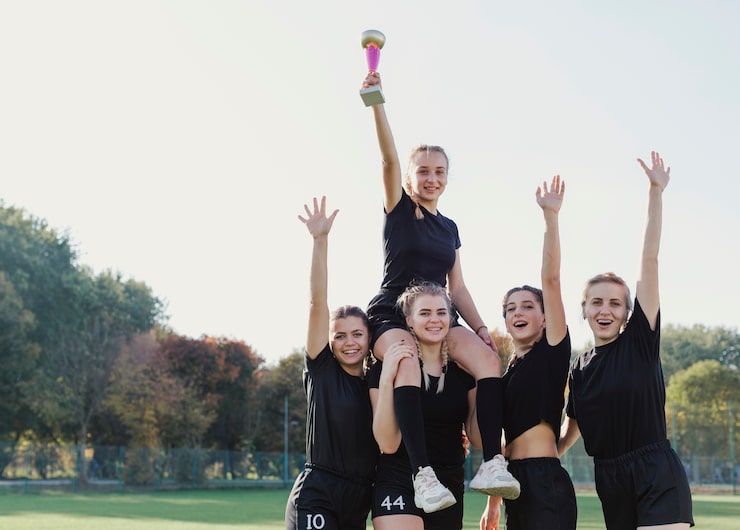
Sports Team Motivation is the invisible engine that turns a group of individuals into a resilient, hungry unit that performs when it counts. From grassroots clubs to professional locker rooms, motivation decides whether talent becomes trophies or remains potential. In this article we’ll explore practical techniques, human stories, and tested frameworks that coaches, captains, and support staff can use right away.
I still remember a rainy Saturday when Coach Naveen gathered his youth cricket side after three losses. He didn’t berate the team. Instead, he asked one simple question: “What small thing could we fix in the next practice that would make the game feel easier?” That moment reframed frustration into curiosity, and within weeks the side began stringing wins together. That’s the kind of human-centered sports team motivation that shifts cultures.
Sports Team Motivation: Building Culture and Trust
Culture is the soil where motivation grows. Teams that consistently perform don’t do so by accident — they design environments where trust is nurtured, mistakes are reframed as experiments, and every player knows their role.
To build this, leaders must be visible and vulnerable. A coach who shares a learning failure demonstrates that growth is acceptable. When players feel psychologically safe, they take ownership and practice with purpose. This is part of sports team motivation: creating rituals — a pre-practice huddle, a moment of silence before matches, a quick five-minute “what went well” debrief — that communicate values daily.
Trust grows through predictable behavior. If a captain says they’ll back a bowler who bowled a wayward over, and then publicly supports that player, trust deepens. Over time the team stops fearing risk and starts experimenting. That cascade — trust to risk to improvement — is a cornerstone of effective sports team motivation.
Sports Team Motivation: Goal Setting and Micro-Wins
Clear goals focus effort. Ambiguous objectives (“play harder”) are less motivating than precise targets (“lose fewer than three wickets in the first six overs” or “complete 90% of set plays in practice”). Goal-setting aligns individual actions with team strategy and reduces cognitive noise during pressure moments.
Break large goals into micro-wins. Celebrating small, frequent achievements sustains momentum. A training session that nails a single tactical sequence or a player who improves their sprint time by 0.2 seconds deserves recognition. These micro-wins are the fuel of sports team motivation; they reframe slow progress as steady advancement.
Create layered goals: personal development milestones, role-based KPIs, and team performance measures. This layered structure helps players understand how their daily habits feed the bigger picture and keeps motivation consistent across weeks and months.
Leadership, Communication, and Emotional Intelligence
Leadership is the practical art of motivating — not through speeches alone but through consistent behaviors and selective empathy. Captains who listen enforce accountability with care and clarity. Coaches who give concise feedback avoid paralysis.
Emotional intelligence matters. Recognize when a player needs space after a mistake and when they need a blunt reality check. Sport is emotionally charged; managing that charge is a leadership skill that turns peaks into sustainable performance.
Communication frameworks help. Use “Situation-Behavior-Impact” feedback in practice: describe the situation, the specific behavior, and its impact on the team. This reduces defensiveness and encourages learning. These small shifts in communication are central to sports team motivation because they keep feedback actionable and human.
Training Design That Boosts Motivation
Practice must be purposeful. Drills that mimic match pressures cultivate confidence. For instance, turning a tactical drill into a short, competitive mini-game introduces stakes and urgency. Players value practices that clearly transfer to match performance.
Variation prevents boredom. Rotate practice formats, integrate cognitive tasks, and occasionally bring in external challenges — a visiting coach, a mixed-age scrimmage, or a fitness circuit tied to game scenarios. Variety signals progress and keeps motivation high.
Use deliberate practice cycles with clear objectives, immediate feedback, and increasing difficulty. When athletes see measurable improvement, motivation stabilizes and becomes self-reinforcing.
Mental Skills, Focus, and Pre-Performance Routines
Motivation is sustained by mental readiness. Techniques like visualization, breathing exercises, and short pre-performance rituals sharpen focus and lower anxiety. Pre-match routines signal the brain that it’s time to perform.
Teach players simple focus anchors: a breath count, a cue word, or a physical routine (tie shoelace, adjust wristband). These anchors interrupt negative spirals and bring attention back to the task. Integrating mental skills into daily training elevates the entire team’s capacity to mobilize motivation under pressure.
Using Data and Feedback to Fuel Motivation
Modern teams increasingly rely on data, but numbers only motivate when translated into meaningful action. Share performance metrics that players can influence: sprint times, pass accuracy, or recovery scores. When athletes see their data improving, it reinforces that effort pays off.
Frame metrics as tools for growth. Instead of punitive dashboards, create improvement charts and habit trackers. Invite athletes to set their own targets based on data. This co-creation embeds ownership and strengthens sports team motivation by linking autonomy with competence.
Storytelling, Identity, and Shared Purpose
People are wired for stories. Teams that craft a compelling narrative — who they are, what they represent, and what they’re willing to fight for — tap into intrinsic motivation. A shared identity (“we are the team that never gives up” or “we play with precision and respect”) becomes a magnetic force in adversity.
Use rituals to reinforce identity: a team chant, a pre-match playlist, or a shared post-game tradition. Invite veteran players to tell stories of pivotal moments that define the team’s character. Storytelling converts abstract values into lived behaviors and strengthens the motivational weave across generations of players.
Recovery, Wellbeing, and Sustainable Motivation
Burnout kills momentum. Sports team motivation is sustainable when teams protect recovery and wellbeing. Encourage sleep hygiene, balanced nutrition, and mental breaks. Educate players about the link between rest and performance.
Design training loads intelligently and watch for early signs of fatigue. Small investments — massages, restorative sessions, and flexible schedules during congested fixtures — pay dividends in morale and availability. Teams that prioritize wellbeing sustain motivation across long seasons.
Team Roles, Autonomy, and Empowerment
Clarity of role reduces friction. Every player should understand their contribution and how it fits the broader plan. Autonomy in role execution fosters creativity and ownership. Empower players to take small tactical decisions during matches; this boosts engagement and distributes leadership.
Rotate responsibilities occasionally to develop depth and empathy. A batter practicing leadership in net sessions or a defender leading warm-ups broadens skill sets and deepens mutual respect. Role clarity plus empowerment is a key driver of sports team motivation.
Conflict, Accountability, and Healthy Pressure
Conflict is inevitable. Managing it constructively is a test of team maturity. Establish norms for resolving issues — private conversations first, mediated if necessary, and no public scoreboard-shaming. Healthy accountability means balancing support with expectations.
Use accountability rituals: brief peer check-ins, shared commitments written and visible in the locker room, and agreed consequences for missed standards. When accountability is owned by the group, not imposed, motivation flourishes because standards feel fair and earned.
Real-Life Examples and Small Experiments
Consider a regional football squad that struggled with second-half fadeouts. The coach tried a simple experiment: a ten-minute “pressure finish” drill at the end of practice where players had to execute sharp, short sequences under simulated crowd noise. Within weeks the team’s second-half intensity improved and confidence rose. This kind of small, rapid experiment is low-risk and high-impact, and it’s how effective sports team motivation spreads.
Another example is a swimming club that introduced a peer-mentoring system. Senior swimmers were given small incentives to mentor juniors on pacing and technique. The mentorship improved skill transfer and created social bonds that sustained motivation through off-season training.
Measuring Motivation and Adjusting Strategy
Motivation isn’t abstract — you can observe it. Track indicators: training attendance, effort levels, the frequency of positive self-talk, and clutch performance moments. Surveys and short pulse checks (two questions after practice: “How energized did you feel?” and “What’s one thing you learned?”) give rapid feedback.
Combine qualitative check-ins with quantitative metrics. If motivation indicators dip, respond quickly with targeted interventions: a team day out, a reset meeting, or a change in practice structure. The speed of response signals care and keeps motivation from eroding.
Leadership Development and Succession Planning
Great teams outgrow single leaders. Invest in leadership development so motivation is embedded across the roster. Create captaincy matrices, leadership workshops, and incremental responsibility pathways.
Succession planning matters: when a leader leaves due to injury or transfer, the motivational culture should persist. Grooming deputies and distributed leadership ensures continuity and prevents motivational dips during transition periods.
Innovation, Creativity, and the Joy of Play
Balance structure with freedom. Too much rigidity stifles creativity, while too little structure breeds chaos. Provide frameworks that allow players to experiment within safety nets. Encourage creative solutions in practice and reward original thinking.
Remember play’s role: unstructured, joyful play keeps motivation intrinsic. Organize occasional fun sessions — mixed-sport games, light-hearted competitions, or creative challenges. These moments recharge intrinsic motivation and remind athletes why they started playing.
Practical First Steps for Coaches and Teams
Start small and iterate. Run a one-week micro-pilot: tweak one practice format, launch a peer recognition board, or begin a short daily ritual. Measure impacts and scale what works. Involving players in design builds buy-in and accelerates results.
Document practices that succeed and share them across the organization. What works at youth level might, with tweaks, elevate senior squads. Continual learning and adaptation are the hallmarks of teams that keep motivation alive through changing seasons.
This article is designed to be practical and human-centered, giving coaches, captains, and support staff a toolkit to cultivate high-performing, cohesive teams. For teams willing to experiment, measure, and care, sustained sports team motivation becomes a predictable outcome rather than a hopeful wish.
Read also:
lakers vs houston rockets match player stats
dallas mavericks vs houston rockets match player stats
lakers vs golden state warriors match player stats
golden state warriors vs sacramento kings stats
uruguay national football team vs venezuela national football team lineups
argentina national football team vs chile national football team lineups