


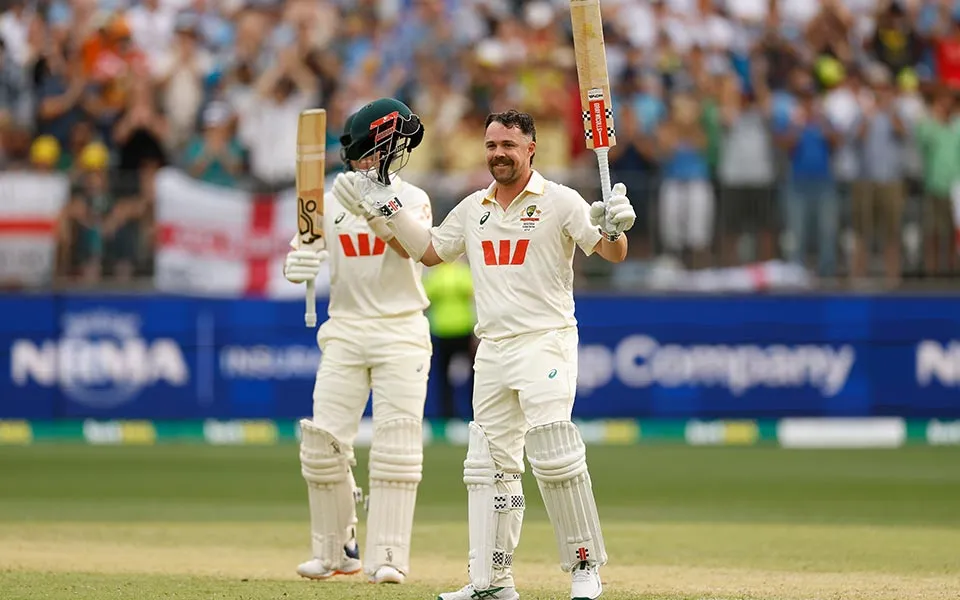
Australia Ashes History began not with a trophy of gold or silver, but with a mock obituary and a tiny terracotta urn that supposedly contains the remains of a burnt cricket bail. This legendary rivalry between Australia and England is the oldest and most storied in international sport, and for any Australian cricketer, the Ashes represents the absolute pinnacle of their career. I remember talking to an old club cricketer who told me that a Baggy Green cap only truly gains its character once it has been soaked in the sweat and dust of a hard-fought Ashes battle. It is a sentiment that echoes through the corridors of every cricket stadium from the windy heights of Perth to the humid atmosphere of Brisbane.
The genesis of this rivalry is famously rooted in a surprise Australian victory at The Oval in 1882. When the Australian team, led by Billy Murdoch, defeated England on their home soil for the first time, the English press was in a state of shock. A journalist named Shirley Brooks published a mock obituary in The Sporting Times, lamenting the death of English cricket and stating that “the body will be cremated and the ashes taken to Australia.” This witty piece of journalism unintentionally created a mythical prize that has driven both nations to the brink of obsession for over a century and a half.
When an English team toured Australia later that year, the captain Ivo Bligh was presented with a small urn by a group of Melbourne women. While the urn itself remains at Lord’s in London, the spirit of those ashes travels across the globe every two years. For Australians, the quest to “bring back the urn” is more than just a sporting goal; it is a matter of national identity. Every child playing in a suburban backyard in Sydney or Adelaide dreams of being the one to strike the winning run against the old enemy.
The early years of Australia Ashes History were marked by a rugged brand of cricket that reflected the growing pains of a young nation. Australia quickly established itself as a powerhouse, proving that the former colony could stand toe-to-toe with the British Empire on the cricket pitch. These early encounters were often grueling affairs, played on uncovered pitches where the ball could behave unpredictably. This unpredictability only added to the drama, creating legends out of men who possessed the grit to survive the most challenging conditions.
The Bradman Era and the Birth of Modern Dominance
If there is one name that defines the Australian perspective of the Ashes, it is undoubtedly Sir Donald Bradman. His impact on the game was so profound that it forced England to devise completely new, and highly controversial, tactics just to stop him. In the 1930 series, Bradman scored a staggering 974 runs, a record that still stands today. He was a scoring machine, an enigma that English bowlers simply could not solve through traditional means. His dominance was so complete that it created a sense of psychological dread whenever he walked out to the middle.
This led to the infamous “Bodyline” series of 1932-33, which remains one of the most contentious chapters in Australia Ashes History. The English captain, Douglas Jardine, instructed his fast bowlers to aim at the bodies of the Australian batsmen, with a packed leg-side field ready to catch any defensive nudges. It was a brutal, intimidating style of play that left several Australian players injured and strained diplomatic relations between the two countries. I have read accounts of fans at the Adelaide Oval nearly rioting as they watched their heroes being pelted by short-pitched deliveries.
Despite the physical toll of Bodyline, the Australian spirit remained unbroken. The controversy actually strengthened the resolve of the team and the public, cementing the idea that Australian cricket was about resilience in the face of unfair odds. When Bradman returned to lead the “Invincibles” in 1948, he oversaw a team that went an entire tour of England without losing a single match. It was a feat of such magnitude that it has never been repeated, standing as a testament to a golden generation of cricketers who redefined the standards of the sport.
The post-war era saw a transition to new legends like Richie Benaud and the Chappell brothers. Benaud, in particular, was a visionary captain who understood that the Ashes needed to be entertaining to thrive. He brought a sense of flair and strategic brilliance to the contest, ensuring that the rivalry remained at the forefront of the public imagination. By the time the 1970s arrived, the Ashes had become a televised spectacle, with the terrifying pace of Dennis Lillee and Jeff Thomson providing a new level of theater for fans around the world.
Modern Domination: The Warne and McGrath Years
The late 1980s saw a shift in momentum that would eventually lead to nearly two decades of Australian dominance. Under the stern leadership of Allan Border, the Australian team transformed from a struggling side into a ruthless winning machine. This era reached its peak in the 1990s and early 2000s, a period many fans consider the greatest in Australia Ashes History. It was a time when the team boasted a lineup of generational talents who seemed almost impossible to defeat on their day.
No story of modern Ashes cricket is complete without mentioning Shane Warne’s “Ball of the Century” in 1993. On his very first ball in an Ashes Test, Warne delivered a leg-break that drifted vastly outside leg stump only to rip back and clip the top of Mike Gatting’s off-stump. I remember watching the replay and seeing the look of utter disbelief on Gatting’s face; it was the moment that spin bowling was reborn. Warne would go on to haunt English batsmen for over a decade, finishing his career with a record-breaking haul of wickets.
Alongside Warne stood Glenn McGrath, a bowler whose metronomic accuracy and unrelenting pressure made him the perfect foil. McGrath had a knack for targeting the opposition’s best players, often predicting exactly how he would get them out before the series even started. This era also featured the aggressive batting of Matthew Hayden, the tactical genius of Steve Waugh, and the flamboyant leadership of Ricky Ponting. Together, they created a legacy of winning that saw Australia retain the Ashes for sixteen consecutive years.
The 2005 series, however, proved that even the greatest empires can be challenged. Often cited as the greatest Test series ever played, it was a summer of high drama where England finally reclaimed the urn in a pulsating 2-1 victory. For Australian fans, it was a heartbreaking result, but it also revitalized the rivalry. It reminded everyone that the Ashes is at its best when the two teams are perfectly matched, pushing each other to the absolute limit of their physical and mental endurance.
The Cultural Significance of the Ashes for Australians
Beyond the statistics and the records, the Ashes holds a unique place in the Australian psyche. It is a cultural touchstone that marks the passing of the seasons. The Boxing Day Test at the Melbourne Cricket Ground (MCG) is a pilgrimage for thousands of fans who travel from across the country to witness the spectacle. There is something truly magical about sitting in a crowd of 90,000 people as the first ball is bowled on a hot December morning, with the scent of sunscreen and meat pies lingering in the air.
This deep connection is why the Australia Ashes History is taught to young cricketers like a set of ancient myths. Every generation is expected to uphold the standards set by those who came before them. When Steve Smith scored those incredible back-to-back centuries at Edgbaston in 2019, it wasn’t just about the runs; it was about his place in a long line of Australian masters who thrived under English pressure. He was channeling the ghosts of Bradman and Waugh, proving once again that the Baggy Green brings out the best in those who wear it.
The rivalry has also been a platform for some of the most memorable displays of sportsmanship. We often talk about the “sledging” and the intense on-field battles, but there is also a profound respect between the two nations. I think of the image of Andrew Flintoff comforting a devastated Brett Lee after the two-run thriller at Edgbaston in 2005. It is a reminder that while the competition is fierce, the shared love for the game and the history of the contest creates a bond that transcends the final result.
In recent years, the rise of the women’s Ashes has further enriched this history. The multi-format series has brought a new level of excitement and skill to the rivalry, with players like Ellyse Perry and Meg Lanning becoming icons in their own right. The women’s game has embraced the traditions of the Ashes while carving out its own unique path, ensuring that the rivalry remains vibrant and inclusive for a new generation of fans who want to see the best versus the best.
Tactical Evolution and the Role of Modern Technology
The way the Ashes is played has changed dramatically since the days of flannel trousers and uncovered wickets. Today, Australia Ashes History is influenced by high-tech data analysis, drone footage, and biometric sensors. Coaches use heat maps to find a batsman’s weakness and high-speed cameras to perfect a bowler’s wrist position. This scientific approach has turned the rivalry into a high-stakes chess match where every move is calculated and every risk is weighed against the probability of success.
Despite the technology, the fundamental challenge of the Ashes remains the same: the ability to handle the swinging ball in England or the searing heat and bounce of Australia. The conditions are a character in themselves, often dictating the outcome of a match more than any individual performance. An Australian team that can’t adapt to the gray skies and lush green outfields of London will struggle, just as an English team that can’t handle the sun-baked cracks of the WACA will find themselves in trouble.
Modern captains like Pat Cummins have had to balance this tactical complexity with the traditional values of Australian cricket. Cummins, the first fast bowler to lead Australia in a full Ashes series, has brought a sense of calm and clinical execution to the side. His leadership reflects a modern Australia—one that is professional, respectful, but still possesses that underlying “white-line fever” that has always defined the country’s approach to the old enemy.
The 2023 series was perhaps the most vivid example of how the game continues to evolve. With England’s “Bazball” approach—an ultra-aggressive style of batting—clashing with Australia’s more traditional, calculated methods, the series was a fascinatng tactical experiment. It showed that even after 140 years, there are still new ways to play this ancient game. The drama of the Lord’s stumping and the nail-biting finishes proved that the Ashes remains the most relevant and exciting contest in the cricketing world.
Memorable Venues That Shape the Baggy Green Legacy
Every stadium involved in the Ashes has its own distinct personality, contributing to the rich tapestry of Australia Ashes History. The Gabba in Brisbane is famously known as the “Gabbatoir” for visiting English teams, a place where the humidity and the partisan crowd create a hostile environment. Australia has traditionally started their home summers here, using the fortress-like atmosphere to set a dominant tone for the rest of the series.
Then there is the Adelaide Oval, often considered the most beautiful cricket ground in the world. The historic scoreboard and the cathedral-like atmosphere provide a stunning backdrop for some of the most technical battles in the game. It was here that Bodyline reached its boiling point, and it is here that the day-night Test has found a permanent home. The sight of the pink ball zipping around under the lights has added a new, modern chapter to the Ashes saga.
Across the ocean, venues like Lord’s and The Oval hold a special place in the hearts of Australian fans. Winning a Test match at Lord’s is often described by players as a “bucket list” moment. The walk through the Long Room, surrounded by the portraits of the game’s legends, is a reminder of the weight of history that every player carries. For an Australian, conquering the “Home of Cricket” is the ultimate validation of their skill and their place in the annals of the sport.
The SCG in Sydney traditionally hosts the New Year’s Test, often turning into a “Pink Test” in support of the McGrath Foundation. This event perfectly captures the intersection of sport and community that defines Australian cricket. It is a time for celebration, reflection, and the occasional spin-bowling masterclass on a pitch that has historically favored the slower bowlers. These venues are not just buildings; they are the stages upon which the greatest dramas of the rivalry have been performed.
The Enduring Spirit of the Rivalry
As we look toward the future, the importance of maintaining the integrity and the passion of the Ashes is clear. It is a rivalry that has survived world wars, economic depressions, and massive changes in the way we consume media. Through it all, the tiny terracotta urn has remained a symbol of excellence and a reminder of the shared history between two great nations. The Australia Ashes History is a living document, with every new series adding a fresh layer of complexity and emotion.
The players of today understand that they are merely custodians of a legacy that belongs to the fans. They play for the people who stay up all night to watch a scorecard flicker on a phone screen and for those who save up for years to travel halfway across the world to see a single match. This connection is what makes the Ashes truly special; it is a sport that belongs to the collective memory of millions, fueled by a passion that never seems to dim.
Whether it is the raw pace of a Mitchell Johnson spell or the technical perfection of a Steve Smith century, the moments we witness in an Ashes series stay with us forever. They become the stories we tell our children and the benchmarks against which we measure all other sporting achievements. The rivalry is a testament to the enduring power of Test cricket, proving that a five-day match can still hold the world’s attention in an era of instant gratification.
As long as there is a red ball and a green pitch, the Ashes will continue to be the ultimate battleground for Australian cricketers. The quest for the urn will always be a journey filled with triumph, heartbreak, and incredible skill. It is a story that has no end, only new beginnings, as each generation takes its turn to step onto the field and write their own chapter in the magnificent saga of the Ashes.
Read also :-
bangladesh national cricket team vs new zealand national cricket team match scorecard
mi cape town vs paarl royals match scorecard
pakistan national cricket team vs south africa national cricket team
australian men’s cricket team vs south africa national cricket team match scorecard
mi emirates vs sharjah warriors match scorecard
sri lanka national cricket team vs australian men’s cricket team match scorecard