


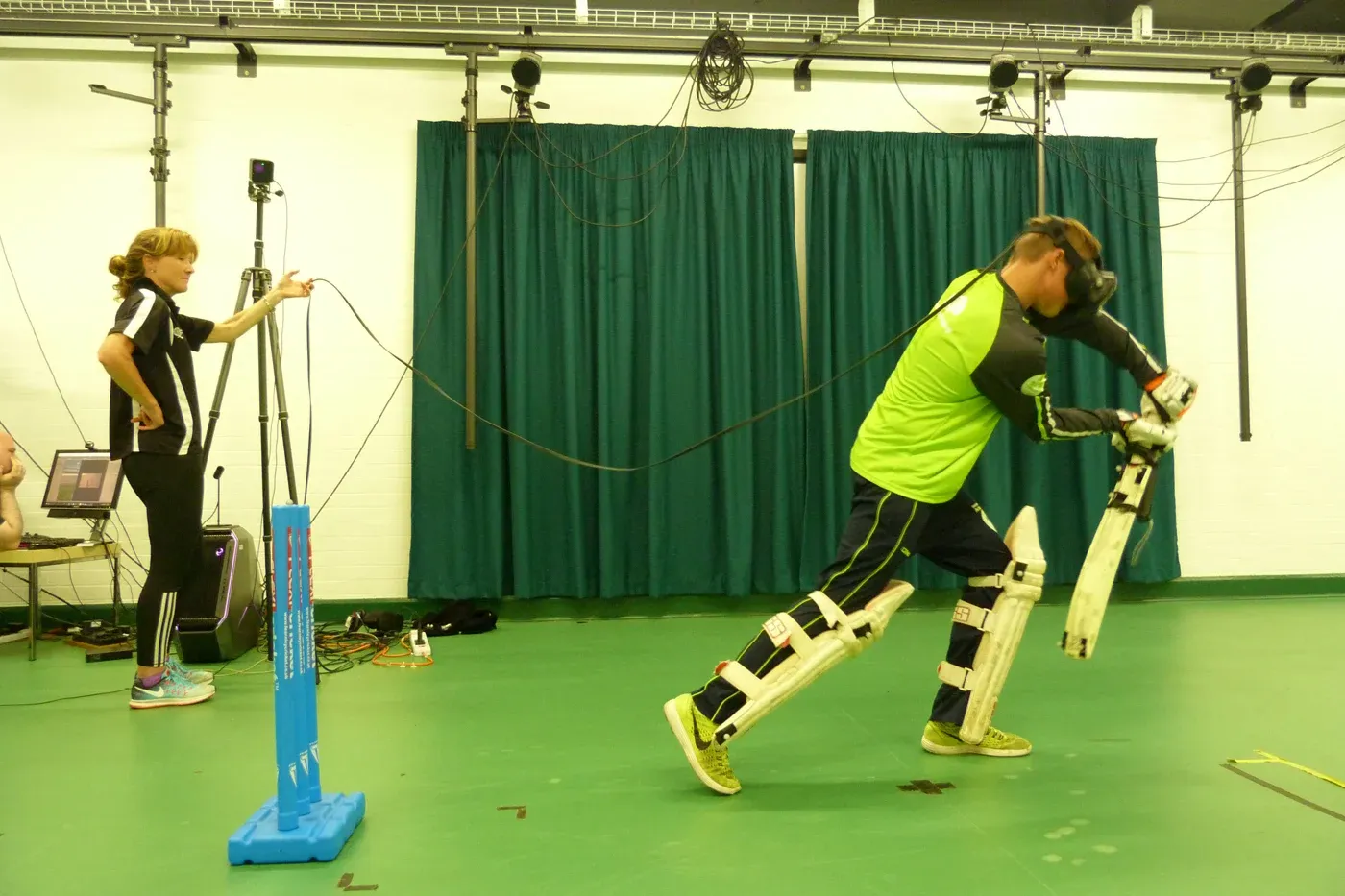
Virtual reality cricket training is no longer a futuristic fantasy seen in sci-fi movies or elite research labs. It is becoming a practical, game-changing tool that cricketers at every level can use to sharpen skills, improve decision-making, and simulate real match pressure without stepping onto a physical field. From young academy players to professional teams, VR is quietly redefining how cricket is learned, practiced, and mastered.
Cricket has always been a sport of precision, patience, and repetition. Traditionally, players relied on nets, coaching drills, and match practice to refine their craft. But those methods come with limitations. Weather disruptions, lack of quality bowlers, safety concerns, and time constraints often hinder consistent training. Virtual reality removes many of these barriers by creating immersive, repeatable, and data-driven practice environments that mimic real match scenarios.
This article explores how VR is reshaping cricket training, why it matters, and how players and coaches can leverage this technology to gain a competitive edge.
The Evolution of Cricket Training in the Digital Age
Cricket training has evolved dramatically over the last few decades. Earlier generations relied on instinct, manual coaching, and limited video analysis. Today’s players benefit from biomechanics, wearable sensors, AI analytics, and high-speed cameras. Virtual reality is the next major leap in this evolution.
The idea behind VR training is simple but powerful. Instead of just imagining match situations, players can experience them in a fully immersive 3D environment. Wearing a VR headset, a batter can face a virtual bowler delivering realistic deliveries at match speed. A fielder can practice catching in a packed stadium. A wicketkeeper can sharpen reflexes against simulated edges and stumpings.
This shift from imagination to immersion is what makes VR such a transformative tool in cricket.
How Virtual reality cricket training Works in Practice
Virtual reality cricket training combines hardware and software to create realistic cricket simulations. Players wear VR headsets, sometimes combined with motion sensors, haptic gloves, or bat-tracking devices. These tools capture body movements and translate them into the virtual environment.
The software then simulates bowlers, pitches, stadiums, and match scenarios. Some platforms use real-world data from professional bowlers to replicate their exact release points, swing, seam movement, and pace. Others integrate AI to adapt difficulty based on the player’s performance.
For example, a batter can face virtual versions of famous bowlers like express pacers or mystery spinners. They can practice specific shots repeatedly, adjust footwork, and experiment with technique without physical fatigue or risk of injury.
This level of customization makes VR training highly efficient and personalized.
Benefits of Virtual Reality for Batters
Batting is one of the most mentally demanding skills in cricket. Players must read the bowler’s action, judge the length, decide the shot, and execute it within fractions of a second. VR training helps batters develop these skills in a controlled environment.
One of the biggest advantages is repetition without wear and tear. A batter can face hundreds of deliveries in a short time without the physical strain of net sessions. This is especially useful for developing muscle memory and shot selection.
VR also improves anticipation and reaction time. By facing realistic virtual bowlers, players learn to pick up cues from the bowler’s hand, wrist position, and body language. This enhances decision-making, which is crucial at higher levels of cricket.
Another benefit is confidence building. Facing world-class bowlers in a virtual setting reduces fear and anxiety. When players encounter similar situations in real matches, they feel more prepared and composed.
Virtual reality cricket training for Bowlers and Fielders
Virtual reality cricket training is not limited to batters. Bowlers and fielders also gain significant advantages from immersive simulations.
Bowlers can analyze their run-up, release point, and body mechanics using VR-based motion tracking. Some systems provide instant feedback on line, length, and consistency. This helps bowlers refine technique and reduce the risk of injury.
Fielders can practice catching, throwing, and positioning in different match scenarios. VR can simulate crowd noise, lighting conditions, and pressure situations like final-over catches. This mental rehearsal improves composure and decision-making under pressure.
Wicketkeepers, in particular, benefit from VR simulations. They can practice stumpings, catches, and footwork against a wide range of deliveries, including edges and deflections that are difficult to replicate in traditional training.
Real-Life Adoption by Professional Teams and Academies
Virtual reality is not just a concept; it is already being used by professional cricket teams and academies around the world. Several national teams and IPL franchises have experimented with VR training modules to prepare players for specific opponents and conditions.
For example, teams can simulate pitches from different countries. A player preparing for a tour of Australia can practice on a virtual bouncy pitch, while someone heading to the subcontinent can train on turning tracks. This contextual preparation gives players a strategic advantage.
Youth academies are also adopting VR to make training engaging and effective. Young players often find traditional drills repetitive, but VR gamifies practice, increasing motivation and focus.
The Psychological Edge of Immersive Training
Cricket is as much a mental game as it is physical. Pressure, crowd noise, and high-stakes situations can affect performance. Virtual reality offers a unique way to train the mind.
By simulating match-like environments, players can practice staying calm under pressure. They can rehearse high-pressure scenarios such as chasing a target in the final over or defending a low total. This mental conditioning helps players build resilience and confidence.
Sports psychologists often emphasize visualization techniques. VR takes visualization to the next level by turning imagination into an interactive experience. Players can repeatedly experience challenging situations and develop coping strategies, reducing anxiety in real matches.
Data-Driven Insights and Performance Analytics
One of the most powerful aspects of VR training is data collection. Every movement, reaction time, and decision can be recorded and analyzed. Coaches receive detailed insights into a player’s strengths and weaknesses.
For batters, data may include shot selection, reaction time, footwork patterns, and success rates against different deliveries. For bowlers, metrics such as consistency, release angles, and accuracy can be tracked.
This data-driven approach allows coaches to create personalized training programs. Instead of generic drills, players receive targeted feedback and improvement plans, accelerating development.
Accessibility and Cost Considerations
While VR technology was once expensive and limited to elite teams, it is becoming more accessible. Consumer-grade VR headsets are now affordable, and cricket-specific training software is expanding.
Local academies, schools, and even individual players can invest in basic VR setups. As the technology matures, costs are expected to decrease further, making it a mainstream training tool.
However, it is important to note that VR should complement, not replace, traditional training. Physical conditioning, real-ball practice, and on-field experience remain essential. VR acts as an additional layer that enhances learning and preparation.
Challenges and Limitations of VR in Cricket
Despite its benefits, VR training has limitations. One challenge is the lack of physical feedback. While some systems use haptic devices, they cannot fully replicate the feel of hitting a real ball or catching under natural conditions.
Another limitation is motion sickness for some users. Extended VR sessions can cause discomfort, although this is improving with better hardware and software optimization.
There is also a learning curve for coaches and players. Effective use of VR requires understanding the technology and integrating it into training routines. Without proper guidance, VR sessions may become novelty experiences rather than structured training tools.
The Future of Cricket Training with VR and AI
The future of cricket training lies in the integration of VR with artificial intelligence and advanced analytics. Imagine a system that not only simulates bowlers but also adapts in real time based on the player’s performance. If a batter struggles against short-pitched deliveries, the AI can increase the frequency of bouncers and provide targeted feedback.
Augmented reality may also play a role, overlaying digital information onto real-world practice sessions. Combined with wearable sensors, these technologies could create a holistic training ecosystem that covers physical, technical, and mental aspects of the game.
As esports and gaming technologies continue to influence sports training, cricket is poised to become more data-driven and immersive than ever before.
How Coaches Can Integrate VR into Training Programs
Coaches play a crucial role in maximizing the benefits of VR training. The key is to integrate VR sessions into existing training frameworks rather than treating them as standalone activities.
For example, a batting session could start with VR simulations to practice decision-making, followed by net practice to apply those skills physically. Similarly, fielders can rehearse scenarios in VR before practicing drills on the field.
Coaches should also use VR data to track progress and adjust training plans. Regular assessments and goal-setting ensure that VR sessions contribute to measurable improvement.
Player Perspectives and Experiences
Many players who have tried VR training describe it as a game-changer. They appreciate the ability to practice against world-class bowlers without leaving their training facilities. Young players find VR engaging and fun, which increases practice time and focus.
Professional players often use VR for match preparation. For instance, a batter facing a unique bowling style can rehearse against a virtual version of that bowler. This targeted preparation reduces uncertainty and improves performance on match day.
These real-life experiences highlight the practical value of immersive training technologies.
Ethical and Developmental Considerations
As with any technology, it is important to use VR responsibly. Young players should not rely solely on virtual training at the expense of real-world experience. Physical fitness, teamwork, and on-field instincts are critical components of cricket that cannot be fully replicated in virtual environments.
Coaches and parents should ensure a balanced approach, combining VR with traditional training methods. When used wisely, VR can accelerate learning without compromising holistic development.
Why Virtual reality cricket training Matters for Grassroots Cricket
Virtual reality cricket training has the potential to democratize access to high-quality coaching. In many regions, players lack access to experienced coaches or quality facilities. VR platforms can provide standardized training modules, allowing players in remote areas to learn advanced techniques.
This could be particularly impactful in cricket-loving countries where talent is abundant but resources are limited. With affordable VR setups, grassroots players can practice with simulated professional-level guidance, bridging the gap between local and elite training.
The Business and Industry Impact of VR in Cricket
The rise of VR training is also creating new opportunities for tech companies, sports startups, and content creators. Developers are building cricket-specific VR software, hardware manufacturers are designing motion-tracking devices, and sports academies are offering VR-based training programs.
This growing ecosystem is attracting investment and innovation. As more stakeholders enter the market, competition will drive better products, lower costs, and wider adoption.
For cricket boards and franchises, VR represents a strategic investment in player development and performance optimization.
Practical Tips for Getting Started with VR Training
Players and coaches interested in VR training should start with clear objectives. Identify specific skills to improve, such as batting against spin or catching under lights. Choose VR platforms that offer cricket-specific simulations and analytics.
Start with short sessions to avoid fatigue and motion sickness. Gradually integrate VR into regular training routines. Track progress using data provided by the system and adjust training plans accordingly.
Most importantly, maintain a balance between virtual and physical practice to ensure comprehensive skill development.
The Cultural Shift Toward Tech-Enhanced Sports Training
Cricket has traditionally been seen as a game rooted in tradition and intuition. The introduction of VR represents a cultural shift toward technology-enhanced training. Younger generations are more comfortable with digital tools, and VR aligns well with their learning styles.
This shift does not diminish the spirit of cricket; instead, it enhances preparation and performance. By embracing technology, cricket can evolve while preserving its core values and traditions.
Virtual reality cricket training and the Future Generation of Cricketers
Virtual reality cricket training is shaping the future generation of cricketers who are more analytical, adaptable, and mentally resilient. These players grow up with access to immersive simulations, data-driven feedback, and personalized coaching.
As VR becomes more mainstream, it will likely become a standard component of cricket academies and professional training programs. Future stars may credit VR as a key factor in their development, just as current players credit video analysis and sports science.
The integration of VR into cricket training marks a significant milestone in the sport’s evolution, blending tradition with innovation in a way that enhances performance, accessibility, and enjoyment.
Read also:-
vidarbha cricket team vs mumbai cricket team match scorecard
new zealand national cricket team vs sri lanka national cricket team match scorecard
south africa national cricket team vs india national cricket team timeline
new zealand national cricket team vs pakistan national cricket team timeline
zimbabwe national cricket team vs ireland cricket team timeline
vidarbha cricket team vs mumbai cricket team stats