


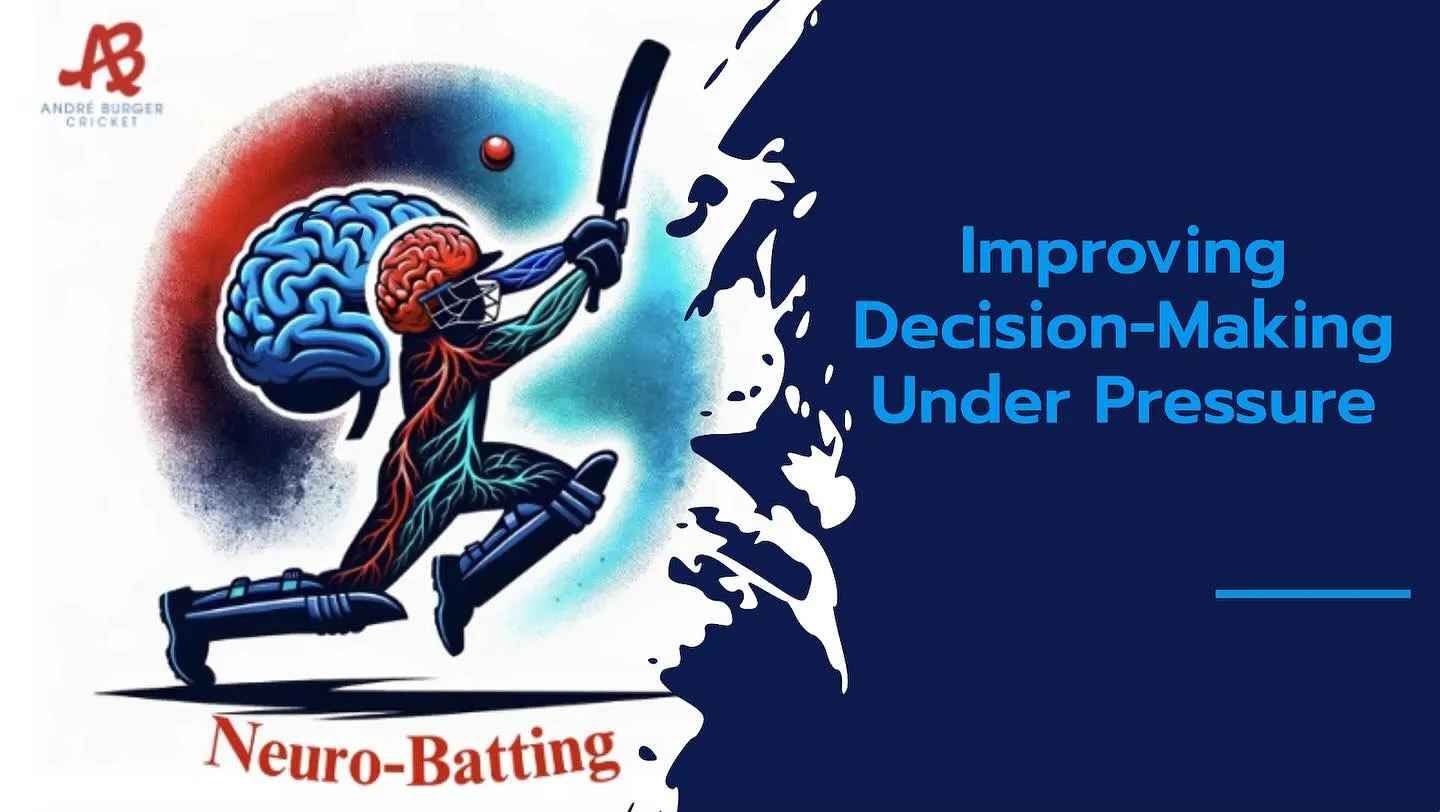
decision making under pressure is the ultimate crucible where character is forged and championships are won or lost in the blink of an eye. Whether you are a corporate executive facing a hostile takeover or a cricket captain defending ten runs in the final over of a World Cup, the internal mechanics of your mind remain the same. The air feels thinner, the noise of the crowd fades into a dull hum, and the ticking clock becomes a hammer hitting an anvil. In these moments, the ability to filter out the chaos and focus on a single, effective action is what separates the elite from the average.
We often talk about “clutch” players as if they possess a magical gene that makes them immune to stress. However, if you talk to any high-level performer, they will tell you that the pressure never truly disappears. Instead, they have developed a refined system for decision making under pressure that allows them to function at a high level despite the adrenaline coursing through their veins. It is about cognitive discipline—the art of narrowing your field of vision until only the essential variables remain. When the stakes are at their highest, your brain naturally wants to over-analyze, but success requires you to simplify.
Think back to the most intense moment you have ever experienced. Perhaps it was a job interview that could change your career, or a critical point in a competitive match. Your heart rate spikes, your palms get damp, and your mind begins to race with “what if” scenarios. This is the biological fight-or-flight response kicking in. The challenge is that while this response was great for outrunning a predator on the savannah, it is often counterproductive for complex modern tasks. Learning to override this instinctual panic is the first step toward mastering your internal environment.
Great decision-makers often rely on a concept known as “thin-slicing.” This is the ability of the subconscious to find patterns in a chaotic situation based on very narrow windows of experience. When an elite batter sees a bowler’s wrist position at the point of release, they aren’t consciously calculating the trajectory of the ball. Their brain has “thin-sliced” the information, allowing them to react instinctively. This level of intuition is not a gift; it is the result of thousands of hours of deliberate practice that has moved complex skills from the conscious mind to the reflexive one.
The Psychological Foundations of Decision Making Under Pressure
To understand how to improve your performance, we must first look at what happens to the human brain when the heat is turned up. When we perceive a threat—even a social or professional one—the amygdala triggers a release of cortisol and adrenaline. This “amygdala hijack” can shut down the prefrontal cortex, which is the part of the brain responsible for logical reasoning and long-term planning. This is why people often “blank” during a high-stakes presentation or make uncharacteristic errors in the final minutes of a game.
Building resilience against this hijack involves a process called habituation. By exposing yourself to controlled levels of stress during training, you teach your brain that the “pressure” is not a life-threatening emergency. In the world of elite sports, this is why coaches create high-intensity drills that mimic the exact conditions of a match. They want the players to feel the burn of fatigue and the sting of criticism in a safe environment so that when the real moment arrives, the brain recognizes the sensation and stays in a functional state.
Another vital component of decision making under pressure is the management of “cognitive load.” Our working memory has a limited capacity, and under stress, that capacity shrinks even further. If you are trying to remember a dozen different technical instructions while the game is on the line, you will likely fail at all of them. The best leaders focus on one or two “key triggers.” They simplify the mission into its most basic form. For a bowler, it might just be “hit the top of off-stump.” For a CEO, it might be “protect the core asset.”
Emotional regulation is the silent partner of logical thought. You cannot make a good decision if you are drowning in frustration or fear. Many top-tier athletes use “anchoring” techniques—small physical rituals that signal to the brain that it is time to focus. It could be adjusting a glove, taking a specific number of breaths, or repeating a short mantra. These rituals act as a reset button, clearing away the emotional clutter and allowing the logical mind to take the wheel once again for the next task at hand.
Practical Drills to Enhance Decision Making Under Pressure
If you want to get better at executing when the stakes are high, you have to stop practicing in your comfort zone. True growth happens when the outcome matters and there is a consequence for failure. In a team setting, this might mean adding a competitive element to every drill. If the losing side has to do extra sprints or buy lunch for the winners, the stakes are suddenly real. This small amount of skin in the game forces the mind to deal with the consequences of its choices, which is the essence of real-world pressure.
One effective method used by tactical units and sports teams alike is “Scenario-Based Training.” Instead of just practicing skills in a vacuum, you recreate specific high-pressure moments. For example, a cricket team might practice a scenario where they need 15 runs off the last over with only one wicket in hand. By playing out these “nightmare scenarios” repeatedly, they become familiar. When that exact situation occurs in a real match, the players don’t feel panic; they feel a sense of “I have been here before, and I know what to do.”
Visualization is another powerful tool for improving decision making under pressure. The brain often struggles to distinguish between a vividly imagined event and a real one. By closing your eyes and walking through a high-pressure situation—feeling the nerves, hearing the crowd, and then successfully making the right call—you are building neural pathways. You are essentially “pre-playing” the game. When the actual moment arrives, your brain feels a sense of déjà vu, which significantly lowers the perceived threat level and keeps the prefrontal cortex online.
Self-talk also plays a massive role in how we handle the crunch. The internal dialogue of a poor decision-maker is often focused on the disaster: “Don’t mess up,” “What if we lose?” or “Everyone is watching.” In contrast, the elite performer uses task-oriented self-talk: “Watch the ball,” “Keep the shape,” or “Stay low.” By giving the mind a specific job to do, you leave no room for the intrusive thoughts that lead to “choking.” You are essentially crowding out the fear with focused, actionable information.
Data, Intuition, and the Golden Middle Ground
In the modern era, we have more data than ever before. We can track every movement, every heart rate spike, and every historical probability. While this information is incredibly valuable, it can also lead to “analysis paralysis” during high-stakes moments. The secret to effective decision making under pressure is knowing when to lean on the data and when to trust your gut. Data should inform your preparation, but intuition should drive your execution. You do the homework in the classroom so that you can be free-form on the field.
Think of a captain who has a mountain of data saying that a certain batter struggles against off-spin. However, in the middle of the game, the captain sees that the off-spinner is struggling with their grip and looks nervous, while the local fast bowler is steaming in and looks unstoppable. A data-slave would stick to the script and bowl the spinner. A great leader would sense the shift in momentum and go with the “hot hand.” This ability to read the “vibe” of a game is something that no algorithm can currently replicate.
This “gut feeling” is actually the result of years of pattern recognition stored in the subconscious. It is your brain processing a million tiny variables that you aren’t even aware of. When you feel a strong urge to change direction in a high-pressure moment, it is often your experience speaking to you. The key is to ensure that your intuition is grounded in reality and not just a masked version of fear or ego. This is why post-game reviews are so important; they help you calibrate your intuition for the next time.
Furthermore, communication during these periods must be surgical. When a team is under the pump, the last thing they need is a long, rambling speech. They need clear, directive, and calm instructions. A leader who is screaming or frantic only adds to the cognitive load of the team. A leader who speaks slowly, uses short sentences, and maintains steady eye contact acts as a “calmness anchor” for everyone else. Your external composure directly influences the internal state of everyone around you.
The Role of Experience and the Veteran’s Edge
There is a reason why experienced players are often given the ball or the strike in the final moments of a game. They have a larger “database” of failures and successes to draw from. A veteran has seen the game go wrong a hundred times, and they have seen it go right a hundred times. This perspective allows them to maintain a sense of proportion. They know that while this moment is important, it is not the end of the world. This lowered “catastrophe rating” allows them to stay relaxed and fluid in their movements.
For a rookie, a high-pressure mistake feels like a career-ending disaster. For a veteran, it is just another data point. This difference in perception is everything. If you can lower the perceived cost of failure, you automatically increase your chances of success. This is why great coaches spend so much time talking about “process over results.” If you can convince a player that the only thing that matters is making the right choice—regardless of the outcome—you take the weight of the result off their shoulders.
Experience also teaches you the value of “strategic patience.” Often, the best decision under pressure is to do nothing at all—to wait for the opposition to make the first move or to let the situation settle. A novice often feels they must “make something happen,” which leads to forced errors and rash choices. A seasoned leader knows that pressure is a two-way street. If you can hold your nerve just a few seconds longer than the person across from you, they will often be the one to crack first.
In addition to individual experience, the collective experience of a team is vital. Teams that have been through “wars” together develop a shorthand communication. They can sense each other’s movements and anticipate each other’s needs without saying a word. This collective intuition reduces the “noise” in the system and allows for a much smoother execution of complex tasks. Building this level of synergy takes time and shared hardship, which is why the most stable squads are often the ones who perform best in the playoffs.
Building a Culture That Supports Decisiveness
No individual is an island, and the environment in which you operate heavily influences your ability to think clearly. If you work in a culture that punishes every mistake with extreme severity, your brain will naturally prioritize “not losing” over “trying to win.” This defensive mindset is the enemy of good decision making under pressure. It leads to hesitation, and in high-speed sports or business, hesitation is often fatal. A healthy culture is one where “smart mistakes” are tolerated as long as the logic behind the decision was sound.
Leaders have a responsibility to create this “psychological safety.” This doesn’t mean having low standards; it means ensuring that the fear of consequences doesn’t paralyze the players. When a player makes a bold but unsuccessful choice in a tight game, a great leader will pull them aside and say, “I loved the thinking there; it almost came off. Keep being that brave.” This reinforces the behavior of being decisive, which is far more important for long-term success than the result of any single play.
We also see the impact of environment in the physical layout of the “war room” or the dugout. A cluttered, noisy, and chaotic environment breeds a cluttered and chaotic mind. Many top teams focus on “environmental hygiene,” ensuring that the space around the decision-makers is as calm and organized as possible. They limit the number of voices in the captain’s ear and ensure that the information being fed to them is filtered and relevant. This minimizes the “external load” and allows the leader to focus entirely on the “internal process.”
Ultimately, the goal is to reach a state of “flow” even when the world is watching. Flow is that magical state where the challenge of the task perfectly matches your skill level, and you lose all sense of time and self. In flow, there is no “pressure” because there is no “self” to feel it. There is only the action and the reaction. Reaching this state consistently under the glare of the lights is the ultimate achievement in any field of human endeavor. It is where the science of psychology meets the art of performance.
As you move forward in your own career or sporting journey, remember that every high-pressure moment is an opportunity to practice these skills. Don’t avoid the stress; embrace it as the only way to test the strength of your mental systems. With enough time, practice, and the right mindset, you will find that the moments you once feared become the moments you live for. You will start to see the pressure not as a weight that could crush you, but as the fuel that can propel you to a level of excellence you never thought possible.
The journey toward mastering the mind is a marathon, not a sprint. There will be days when you handle the pressure perfectly and days when you fall short. The key is to remain a student of the process. Analyze your successes just as much as your failures. Look for the patterns in your own behavior and constantly refine your “anchors” and triggers. The more you understand about your own internal weather, the better you will be at navigating the storms that life and sport will inevitably throw your way.