


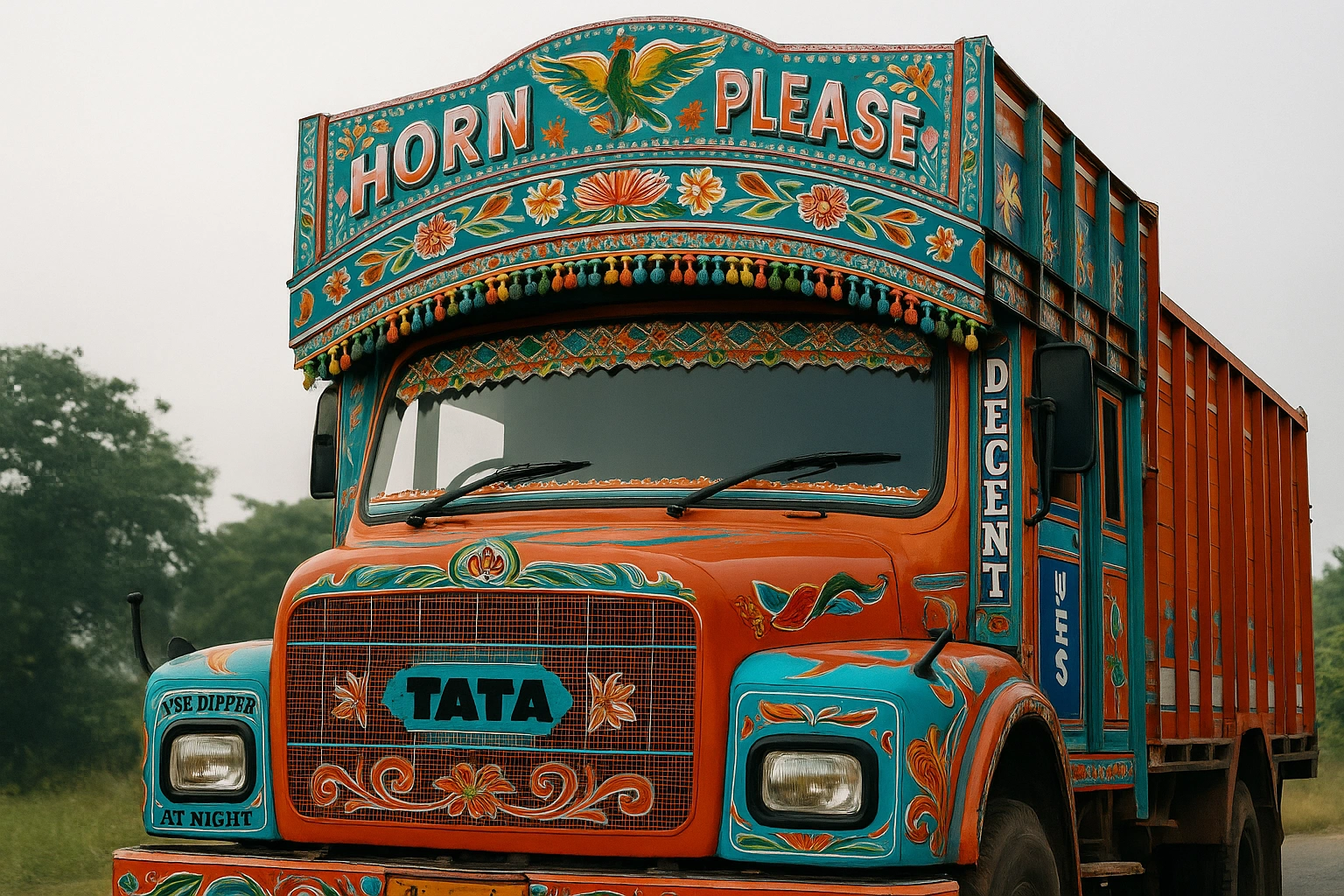
India’s highways have long been a canvas of vibrant colors, poetic phrases, and artistic wonders, thanks to the country’s unique tradition of truck art. With their riotous colors, hand-painted motifs, calligraphy, and religious symbolism, Indian trucks have been moving pieces of cultural expression for decades. But in recent years, this iconic art form seems to be fading from the roads. The question arises: why is India’s truck art, once globally admired, now dying out?
This article explores the origins, cultural importance, economic role, and the growing challenges that threaten to erase this spectacular tradition.
The Origins of Truck Art in India
Truck art in India dates back to the mid-20th century, when drivers and owners began personalizing their vehicles not just for beauty but for luck, pride, and identity. Initially, embellishments were modest: a hand-painted name, a religious icon, or a floral design. But over time, this evolved into an elaborate folk art form.
Common Elements of Indian Truck Art:
- Religious symbols: Hindu gods, Sufi saints, Islamic calligraphy, crosses, and other sacred imagery.
- Poetic quotes: Lines in Hindi, Urdu, Punjabi, or local dialects offering humor, wisdom, or social commentary.
- Animals and scenery: Peacocks, tigers, camels, and landscapes often feature prominently.
- Decorative borders and patterns: Including chains, tassels, and reflective stickers.
- The iconic “Horn OK Please” sign: A call for safe overtaking, which became synonymous with Indian road culture.
These visual statements weren’t just for show. They reflected the trucker’s personality, beliefs, and regional identity, turning each vehicle into a story on wheels.
Cultural Significance and Identity
Truck art became a cultural phenomenon and a source of pride among Indian drivers. Many truckers spend weeks or even months on the road, and their truck becomes their home. Decorating it is a form of self-expression, similar to how people might decorate their living rooms or personal spaces.
In regions like Punjab, Rajasthan, and Maharashtra, truck decoration evolved into a competitive and artistic endeavor, with specialized workshops and artisans catering exclusively to truck art. Some families passed down the tradition for generations.
For many, truck art was also spiritual protection. Symbols of deities or protective slogans were believed to ward off accidents and misfortune. Truck drivers also built shrines inside the cabin and added bells, mirrors, or feathers for blessings.
Also Visit: игры яндекс
Economic Ecosystem Around Truck Art
The truck art industry supported a niche economy:
- Painters and decorators: Artisans who hand-painted designs, signs, and portraits.
- Signboard writers: Skilled in calligraphy and slogans.
- Accessory vendors: Sellers of truck ornaments like mirrors, streamers, and chrome fittings.
- Workshops and garages: That provided not only mechanical repairs but also aesthetic upgrades.
Entire markets in cities like Delhi, Ludhiana, and Mumbai specialized in truck decoration. For artisans, it was not just a job but a respected livelihood.
International Acclaim
India’s truck art became globally admired for its aesthetic richness and cultural storytelling. Photographers, filmmakers, and travel bloggers often highlighted these vehicles as symbols of India’s grassroots creativity. International galleries displayed truck doors and panels as folk art. Brands like Tata and Mahindra even featured truck art in advertising.
Indian truck art was also compared with similar traditions in Pakistan, Afghanistan, and parts of Latin America. But despite its fame, the art form is in decline. Why?
Why Is Truck Art Dying Out?
There isn’t a single reason—it’s a mix of economic, technological, cultural, and regulatory factors.
1. Rise of Vinyl Stickers and Digital Printing
The cost and time involved in hand-painting are considerably higher than using printed vinyl wraps. With advancements in technology, truck owners are now opting for pre-made designs and decals.
- Vinyl is cheaper
- Requires less maintenance
- Faster turnaround
As a result, the need for skilled hand-painters has dramatically dropped.
2. Standardization of Truck Design
Modern logistics companies and fleet operators prefer uniform branding. Custom designs are often seen as unprofessional or unnecessary. Trucks are now treated more as corporate assets than personal expressions.
Fleet trucks come with:
- Company logos
- Plain color schemes
- Regulatory-compliant paint jobs
This has made the traditional flamboyant truck design a rarity.
3. Regulations and Legal Restrictions
Some state governments and traffic authorities have started discouraging overly-decorated trucks, arguing that they distract drivers and create road safety issues. In certain regions, excessive decorations or non-standard colors are fined.
Additionally, the removal of “Horn OK Please” from many trucks due to noise pollution concerns has also stripped one of the most iconic elements of truck art.
Also Visit: yandex games
4. Changing Aspirations of Truckers
Today’s younger generation of truck drivers may not share the same passion for decorating their vehicles. With tight delivery deadlines, rising fuel costs, and diminishing margins, aesthetic personalization has become less of a priority.
Truck drivers are more focused on:
- Efficiency
- Earnings
- Modern amenities in their cabins rather than decoration
5. Decline of Local Artisan Communities
As demand has dried up, many truck artists have shifted careers or left the profession altogether. The younger generation is not keen on learning a skill that offers limited financial security. The artisan community, once proud and prolific, is now dwindling.
Consequences of the Decline
The fading of truck art isn’t just about missing colors on highways. It has broader implications:
- Loss of livelihood for thousands of traditional artists.
- Disappearance of a cultural identity from Indian roads.
- Devaluation of an indigenous art form with international appeal.
- Reduction in visual and linguistic diversity, especially poetic slogans and folk symbolism.
Can Truck Art Be Revived?
While its golden days may be behind, truck art can still be preserved and promoted. Here are some ways:
1. Government and NGO Intervention
Policy initiatives can provide grants and training for truck artists, much like other traditional arts. Including truck art in India’s official list of heritage arts could offer funding and recognition.
2. Cultural Tourism and Museums
Curated exhibitions and truck art museums can keep the spirit alive. Interactive exhibits or traveling trucks could serve as moving art galleries.
3. Art Collaborations
Truck artists can be commissioned for murals, interiors, fashion, and product design. This not only preserves their skills but expands their market.
4. Digital Documentation
Archiving existing truck art through photography, video, and research will help preserve its legacy for future generations.
5. Educational Initiatives
Workshops in schools, colleges, and design institutes can introduce young people to this vibrant tradition and inspire new applications.
Final Thoughts
India’s truck art is more than just visual entertainment. It is a living, breathing expression of grassroots culture, philosophy, and artistic ingenuity. The fading of this tradition is a silent cultural erosion that deserves attention.
Preserving truck art is not about nostalgia. It’s about recognizing the value of a people’s voice painted on wheels, the rhythm of folklore speeding down a dusty highway, and the heritage that speaks in colors and curves.
To revive truck art is to revalue creativity in everyday life—on the roads, in workshops, and across cultures. For a country as culturally rich as India, letting truck art disappear without a fight would be a disservice to its own soul.
Let the trucks speak again, in paint, poetry, and pride.
Also Visit: yandex games
Also Visit: yandex games
Also Visit: yandex games